

Quick Overview:
- Divorce anxiety affects up to 75% of people going through separation, causing physical and emotional symptoms
- Common signs include panic attacks, sleep problems, racing thoughts, chest tightness, digestive issues, avoidance behaviour, and constant worry
- Physical symptoms often mirror those of generalised anxiety disorder but are triggered specifically by divorce-related stress
- Effective management includes professional therapy, support groups, mindfulness practices, structured routines, and medical intervention when needed
- Early recognition and treatment can prevent long-term mental health complications and help you cope better during your separation
What Is Divorce Anxiety?
You wake at 3am with your heart pounding, thoughts racing about solicitors’ fees, custody arrangements, and an uncertain future. Your chest feels tight, your stomach churns, and sleep seems impossible. If this sounds familiar, you’re likely experiencing divorce anxiety.
Divorce anxiety is an intense psychological response to the stress of marital breakdown. It combines the emotional pain of relationship loss with practical worries about finances, children, housing, and your future identity. Unlike general anxiety, it’s directly triggered by separation-related stressors and can affect even people who’ve never experienced anxiety before.
Research from Mind, the mental health charity, shows that major life transitions like divorce rank among the most stressful experiences we face. The combination of grief, uncertainty, and practical upheaval creates a perfect storm for anxiety symptoms to develop.
Why Divorce Triggers Anxiety
Before we look at specific symptoms, it helps to understand why separation creates such intense anxiety about divorce.
Loss of Identity and Security
Marriage often forms part of our core identity. When it ends, you might question who you are without your partner. This identity crisis, combined with losing the security of a familiar relationship, can trigger significant anxiety responses.
Financial Uncertainty
Money worries are one of the biggest sources of divorce-related anxiety. Questions flood your mind: Can I afford to live alone? Will I need to sell the house? How will we split pensions and savings? These practical concerns keep anxiety levels high.
Concerns About Children
If you have children, worries about their well being can be overwhelming. You might experience anxiety about custody arrangements, how they’re coping emotionally, maintaining relationships with both parents, and providing stability during upheaval.
Legal Process Stress
The legal system can feel intimidating and complex. Court dates, solicitor meetings, financial disclosure, and lengthy proceedings all contribute to ongoing stress and anxiety during divorce.
Social and Family Reactions
Concerns about what others think, explaining the situation to family and friends, and potential judgement can add another layer of worry to an already difficult time.
The 7 Key Divorce Anxiety Symptoms You Shouldn’t Ignore
1. Panic Attacks and Sudden Overwhelming Fear
Panic attacks are one of the most frightening manifestations of divorce anxiety. They can appear without warning, leaving you feeling terrified and out of control.
What they feel like:
- Sudden intense fear or dread
- Heart racing or palpitations
- Difficulty breathing or feeling like you’re choking
- Chest pain or tightness
- Dizziness or feeling faint
- Sweating, trembling, or shaking
- Feeling detached from reality
- Fear of dying or losing control
Sarah, 38, describes her first panic attack: “I was sitting in the solicitor’s office when suddenly I couldn’t breathe. My heart was pounding so hard I thought I was having a heart attack. Everything felt unreal, like I was watching myself from outside my body. I had to leave the meeting.”
Why this matters: Panic attacks can become more frequent if left unaddressed. They might start to limit your activities as you avoid situations where attacks have occurred before.
What helps:
- Learn breathing techniques, such as the 4-7-8 method (breathe in for 4, hold for 7, out for 8)
- Ground yourself using the 5-4-3-2-1 technique (name 5 things you see, 4 you can touch, 3 you hear, 2 you smell, 1 you taste)
- Remind yourself that panic attacks, whilst terrifying, aren’t dangerous and will pass
- Consider cognitive behavioural therapy (CBT), which is highly effective for panic symptoms
- Speak to your GP if attacks are frequent or severe
2. Sleep Disturbances and Insomnia
Sleep problems are extremely common when experiencing anxiety from divorce. Your mind races when you should be resting, making it difficult to fall asleep or stay asleep through the night.
Common sleep issues include:
- Lying awake for hours with racing thoughts
- Waking at 3am or 4am unable to get back to sleep
- Nightmares or distressing dreams about your ex-partner or divorce
- Waking feeling exhausted despite being in bed for 8 hours
- Falling asleep through sheer exhaustion, only to wake soon after
According to the NHS, poor sleep significantly worsens anxiety symptoms, creating a difficult cycle where anxiety disrupts sleep, and lack of sleep increases anxiety.
The impact: Chronic sleep deprivation affects your ability to think clearly, make decisions, regulate emotions, and cope with daily stressors. During divorce, when you need your mental resources most, poor sleep leaves you depleted.
What helps:
- Establish a consistent bedtime routine
- Avoid screens for at least an hour before bed
- Keep a notepad beside your bed to write down worries or tasks, so they’re out of your head
- Try relaxation apps like Headspace or Calm
- Limit caffeine after midday
- Consider speaking to your GP about short-term sleep support if insomnia persists
3. Constant Racing Thoughts and Rumination
Divorce anxiety often manifests as an inability to switch your mind off. Thoughts circle endlessly, analysing the past, worrying about the present, and trepidation about the future.
What this looks like:
- Replaying arguments or key moments from your marriage repeatedly
- Obsessing over what you could have done differently
- Constant “what if” thinking about the future
- Unable to concentrate on work, conversations, or daily tasks
- Mind jumping from one worry to another without resolution
Mark, 42, explains: “I’d be in a work meeting, but my mind would be running through worst-case scenarios about losing my house or not seeing my children enough. I’d realise people were looking at me, waiting for an answer, and I hadn’t heard a word.”
Why this matters: Rumination keeps anxiety levels constantly elevated. It prevents you from being present in your life and can lead to depression alongside anxiety.
What helps:
- Practice mindfulness meditation to observe thoughts without engaging with them
- Set aside a specific “worry time” each day (15-20 minutes) to think through concerns, then consciously move on
- Use cognitive restructuring to challenge catastrophic thoughts
- Engage in activities that require full attention, like exercise, crafts, or spending time with friends
- Consider therapy to learn thought-stopping techniques
4. Physical Symptoms: Chest Tightness, Headaches, and Digestive Problems
Anxiety related to divorce doesn’t just affect your mind. It creates real physical symptoms that can be alarming and uncomfortable.
Common physical manifestations: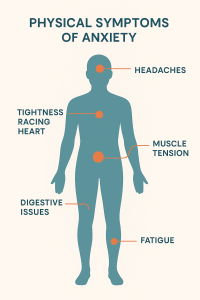
- Chest tightness or pain (often mistaken for heart problems)
- Tension headaches or migraines
- Stomach problems, nausea, or irritable bowel syndrome symptoms
- Muscle tension, particularly in neck, shoulders, and jaw
- Fatigue and exhaustion despite rest
- Changes in appetite (eating much more or less than usual)
- Unexplained aches and pains
According to research from the British Heart Foundation, anxiety-related chest pain is one of the most common reasons people visit A&E, fearing a heart attack. Whilst it’s always right to get chest pain checked, many cases are anxiety-driven.
The physical impact: These symptoms aren’t “all in your head”. Chronic anxiety triggers your body’s stress response repeatedly, flooding you with cortisol and adrenaline. This takes a real physical toll over time.
What helps:
- Get concerning symptoms checked by your GP to rule out other causes
- Practice progressive muscle relaxation to release physical tension
- Regular exercise helps burn off stress hormones
- Yoga or stretching can ease muscle tightness
- Consider massage or physiotherapy for persistent tension
- Ensure you’re eating regular, balanced meals even when appetite is affected
5. Avoidance Behaviour and Withdrawal
When divorce anxiety becomes overwhelming, you might start avoiding situations, people, or tasks that trigger anxious feelings. Whilst this provides temporary relief, it actually makes anxiety worse over time.
Signs of avoidance:
- Putting off opening letters from solicitors or your ex-partner
- Cancelling meetings about financial or custody arrangements
- Avoiding friends or family because you don’t want to discuss the divorce
- Withdrawing from activities you previously enjoyed
- Making excuses not to attend events where you might see your ex or mutual friends
- Procrastinating on important divorce-related decisions
Rachel, 45, noticed this pattern: “I stopped going to my book club because people would ask how I was. I’d leave solicitor emails unread for days. I even avoided taking calls from my best friend because talking about the divorce felt too much.”
Why this matters: Avoidance provides short-term relief but reinforces the message that these situations are truly dangerous. Your anxiety grows stronger, and your world becomes smaller.
What helps:
- Break tasks into very small, manageable steps
- Use the “5-minute rule” – commit to doing something for just 5 minutes
- Ask a trusted friend to sit with you whilst you open difficult correspondence
- Reward yourself after completing anxiety-provoking tasks
- Work with a therapist on gradual exposure techniques
- Remember that anxiety typically peaks then decreases if you stay with the situation
6. Irritability, Anger, and Emotional Outbursts
Many people don’t realise that anxiety during separation often presents as irritability or anger rather than worry. You might find yourself snapping at your children, overreacting to minor frustrations, or feeling constantly on edge.
What this looks like:
- Low tolerance for normal frustrations
- Snapping at people who don’t deserve it
- Feeling constantly tense and ready to explode
- Overreacting to small problems
- Crying easily or having emotional outbursts
- Feeling guilty afterwards about your reactions
This happens because anxiety keeps your nervous system in a state of high alert. Your stress bucket is already full, so even small additional stressors cause it to overflow.
The impact on others: Your children, family, and friends may not understand that your irritability stems from anxiety. They might take it personally or distance themselves when you actually need support most.
What helps:
- Recognise that irritability is a symptom, not a character flaw
- Communicate with people close to you about what you’re experiencing
- Take timeouts when you feel overwhelmed
- Use physical exercise to release pent-up tension
- Practice breathing exercises when irritability rises
- Consider whether you need additional support from your GP or a therapist
7. Constant Worry and Catastrophic Thinking
Perhaps the most recognisable symptom of divorce anxiety is persistent worry that you can’t seem to control. Your mind constantly generates worst-case scenarios about every aspect of your separation.
Common worry themes:
- Financial ruin and poverty
- Losing your home or being unable to afford housing
- Your children being damaged by the divorce
- Losing custody or contact with your children
- Being alone forever
- Never recovering financially or emotionally
- Your ex-partner finding happiness whilst you suffer
- Making wrong decisions with lasting consequences
Emma, 51, describes her experience: “Every morning I’d wake up with a sense of dread. Before I even opened my eyes, worries would start flooding in. What if I can’t afford the bills? What if the children blame me? What if I’m making a terrible mistake?”
Why this matters: Whilst some worry about your divorce is normal and appropriate, excessive worry that interferes with daily functioning indicates anxiety that needs addressing.
What helps:
- Challenge catastrophic thoughts by asking “What evidence do I have that this will happen?”
- Consider the realistic probability of your fears coming true
- Develop a “worry postponement” practice
- Keep a thought diary to identify patterns
- Work with a therapist on cognitive techniques
- Focus on what you can control rather than what you cannot
When to Seek Professional Help for Divorce Anxiety
Not everyone experiencing anxiety symptoms during divorce needs professional treatment. Some level of stress and worry is a normal response to a difficult life transition. However, certain signs indicate it’s time to seek help.
Red Flags That Indicate You Need Support
Seek help from your GP or a mental health professional if:
- Anxiety symptoms persist for more than a few weeks without improvement
- Symptoms are getting worse rather than better over time
- You’re having frequent panic attacks (more than once a week)
- Anxiety is preventing you from completing necessary divorce tasks
- You’re unable to work or fulfil daily responsibilities
- You’re using alcohol or drugs to cope with anxious feelings
- You’re having thoughts of self-harm or suicide
- Physical symptoms are severe or frightening for others
- You’re completely withdrawing from friends, family, and activities
- Your children are being significantly affected by your anxiety
Treatment Options That Actually Work
Talking Therapies
Cognitive behavioural therapy (CBT) is the gold standard treatment for anxiety disorders. It helps you identify unhelpful thought patterns and develop more balanced ways of thinking. CBT for divorce-related anxiety typically focuses on:
- Challenging catastrophic thinking about the future
- Managing uncertainty and loss of control
- Developing practical coping strategies
- Building resilience during a difficult transition
You can access CBT through the NHS via your GP, or you might prefer to see a private therapist. The NHS also offers online CBT programmes through services like SilverCloud.
Counselling
Whilst CBT focuses on thoughts and behaviours, counselling provides a space to process the emotional aspects of your divorce. It can help you:
- Work through grief and loss
- Understand patterns from your marriage
- Build self-esteem and confidence
- Develop clarity about your future
Medication
For moderate to severe divorce anxiety, medication might be helpful alongside therapy. Common options include:
- SSRIs (selective serotonin reuptake inhibitors) like sertraline or citalopram for longer-term management
- Beta-blockers like propranolol for physical anxiety symptoms in specific situations
- Short-term sleeping tablets if insomnia is severe
Your GP can discuss whether medication might benefit you. It’s worth noting that medication works best when combined with talking therapy rather than used alone.
Support Groups
Connecting with others going through similar experiences can reduce feelings of isolation and provide practical coping strategies. Many people find peer support incredibly valuable during divorce.
Look for local divorce support groups through:
- Your local Relate centre
- Community centres and churches
- Online forums and support groups
- Meetup.com divorce support groups in your area
Practical Self-Help Strategies for Managing Divorce Anxiety
Professional help is important, but there are also many things you can do yourself to manage anxiety about divorce day-to-day.
Build a Routine and Structure
When your life feels chaotic, routine provides an anchor. Structure helps reduce anxiety by creating predictability and a sense of control.
Try these approaches:
- Wake up and go to bed at consistent times
- Schedule regular meals, even if appetite is poor
- Plan specific times for divorce-related tasks rather than letting them dominate your day
- Maintain activities that give structure, like work, exercise classes, or volunteering
- Create small daily rituals that bring comfort, like a morning coffee in a favourite mug or evening walks
Practice Mindfulness and Grounding Techniques
Mindfulness helps you stay present rather than getting lost in worries about the future or regrets about the past. You don’t need to meditate for hours; even a few minutes daily can help.
Simple mindfulness practices:
- Download apps like Insight Timer, Headspace, or Calm
- Practice mindful breathing for just 5 minutes daily
- Try body scan meditations before bed
- Use mindful walking, paying attention to each step
- Practice mindful eating by really tasting and noticing your food
Grounding techniques for acute anxiety:
- The 5-4-3-2-1 method (described earlier)
- Hold ice cubes in your hands and focus on the sensation
- Name objects around you in categories (colours, textures, shapes)
- Press your feet firmly into the floor and notice the feeling
- Splash cold water on your face
Maintain Physical Wellbeing
Your physical and mental health are deeply connected. Taking care of your body helps manage separation anxiety symptoms.
Focus on:
Exercise: Physical activity is one of the most effective anxiety treatments. It burns stress hormones, releases endorphins, and provides a break from worrying thoughts. Aim for 30 minutes most days. This could be walking, swimming, cycling, dancing, or gardening.
Nutrition: Anxiety often disrupts eating patterns. Some people lose their appetite entirely, whilst others comfort eat. Try to maintain regular, balanced meals even when you don’t feel like it. Limit caffeine and alcohol, as both can worsen anxiety.
Sleep hygiene: We discussed this earlier, but it’s worth emphasising. Good sleep is perhaps the most important factor in managing anxiety effectively.
Limit Anxiety-Provoking Activities
Whilst avoidance isn’t helpful, it’s sensible to limit activities that unnecessarily spike your anxiety during an already difficult time.
Consider:
- Limiting time checking your ex-partner’s social media (or blocking them entirely)
- Setting boundaries around when you’ll discuss divorce matters with friends
- Taking breaks from divorce forums or groups if they increase your worry
- Limiting news consumption if it’s adding to anxiety
- Being selective about which family events to attend during the acute phase
Develop a Support Network
Isolation makes anxiety worse. Having people you can talk to honestly makes a significant difference.
 Build support through:
- Identifying 2-3 trusted friends or family members who you can be honest with
- Being specific about what you need (listening, practical help, distraction)
- Accepting offers of help with childcare, meals, or company
- Joining divorce support groups (online or in-person)
- Maintaining contact even when you feel like withdrawing
Process Emotions in Healthy Ways
Divorce anxiety often masks other difficult emotions like grief, anger, guilt, or shame. Finding healthy ways to process feelings helps reduce anxiety.
Try:
- Journaling about your thoughts and feelings
- Creative expression through art, music, or writing
- Physical release through exercise, dance, or even breaking plates in a safe space
- Crying when you need to rather than suppressing tears
- Talking with understanding friends or a therapist
Break Tasks Into Small Steps
Overwhelming tasks feed anxiety. Breaking divorce-related work into tiny, manageable steps makes everything feel more achievable.
For example, instead of: “I need to sort out finances” (overwhelming)
Try:
- Find last three months of bank statements
- List all joint accounts
- Note down approximate balances
- Research one local financial adviser
- Book initial consultation
Small steps completed build confidence and reduce anxiety about the larger process.
How Divorce Anxiety Differs From General Anxiety
Whilst the symptoms overlap considerably, divorce anxiety has some distinct characteristics worth understanding.
Situational Versus Generalised
Divorce anxiety is situational, meaning it’s triggered by a specific life event rather than being a chronic, long-term condition. Many people who experience significant anxiety during divorce have never had anxiety problems before.
This means that as you move through and beyond the divorce process, anxiety typically reduces naturally. However, without proper management, situational anxiety can sometimes develop into more generalised anxiety disorder.
Grief and Loss Components
Unlike generalised anxiety, separation anxiety in adults going through divorce includes significant grief. You’re mourning:
- The loss of your marriage and the future you’d planned
- Your identity as part of a couple
- Daily contact with your partner (even if the relationship was difficult)
- The intact family unit if you have children
- Shared friends, in-laws, and community
- Financial security and material possessions
- Dreams and hopes for your relationship
This grief component means that alongside anxiety management, you also need space to grieve properly.
Time-Limited Versus Ongoing
General anxiety disorder can persist for months or years without a clear trigger. Divorce anxiety, whilst intense, is typically time-limited. Most people find anxiety peaks during the acute phase of separation (first 6-12 months) then gradually reduces as life stabilises.
Understanding this can provide hope. Your current level of distress won’t last forever, even though it might feel overwhelming right now.
The Link Between Divorce Anxiety and Depression
Anxiety and depression frequently occur together during divorce. Research shows that around 60% of people with anxiety also experience depression symptoms at some point.
Recognising Depression Alongside Anxiety
Watch for these signs:
- Persistent low mood or feeling numb
- Loss of interest in activities you used to enjoy
- Feelings of worthlessness or excessive guilt
- Difficulty concentrating or making decisions
- Changes in appetite or weight
- Low energy and constant fatigue
- Thoughts of death or suicide
- Feeling hopeless about the future
If you recognise several of these symptoms alongside your anxiety, it’s important to speak with your GP. Depression requires treatment just as much as anxiety does.
Why They Occur Together
The relationship between anxiety and depression during divorce is complex. Sometimes depression develops because chronic anxiety is so exhausting. Other times, both conditions arise from the same source: the stress and loss of divorce.
The good news is that many treatments work for both conditions. CBT, certain medications, exercise, and social connection all help with both anxiety and depression.
Supporting Children When You Have Divorce Anxiety
One of the hardest aspects of experiencing anxiety during divorce is managing your own distress whilst supporting your children through the separation.
How Your Anxiety Affects Your Children
Children are remarkably perceptive. Even young children pick up on parental anxiety through:
- Your tone of voice and body language
- Overhearing conversations or arguments
- Sensing tension and stress in the home
- Changes in routines and your behaviour
- Your emotional availability (or lack of it)
Research shows that parental anxiety during divorce can increase children’s own anxiety and behavioural problems. However, this doesn’t mean you need to hide all feelings or pretend everything is fine.
Balanced Honesty
Children benefit from age-appropriate honesty about the divorce, including acknowledgment that it’s a difficult time for everyone. What matters is:
What helps children:
- Consistent reassurance that both parents love them
- Maintaining routines as much as possible
- Honest but age-appropriate information about changes
- Permission to love both parents
- Seeing parents manage emotions in healthy ways
What doesn’t help:
- Hiding all emotion and pretending everything is fine
- Using children as emotional support
- Speaking negatively about the other parent
- Involving children in adult decisions
- Allowing your anxiety to make children feel responsible for your well being
Getting Support for Children
If you’re struggling with significant anxiety, your children might also need support. Options include:
- School counsellors or pastoral support
- Child and Adolescent Mental Health Services (CAMHS) through GP referral
- Private child therapists or counsellors
- Support groups for children of divorced parents
- Age-appropriate books about divorce
The charity Relate offers support services specifically for children affected by family separation.
Long-Term Outlook: Does Divorce Anxiety Get Better?
If you’re in the depths of divorce anxiety right now, you might wonder whether you’ll ever feel normal again. The good news is that for most people, anxiety does improve significantly over time.
The Typical Timeline
Everyone’s experience is different, but research suggests a general pattern:
First 3-6 months: Anxiety is often at its peak as you adjust to the separation, begin legal processes, and face immediate practical challenges.
6-12 months: Anxiety typically begins to reduce as you establish new routines, gain clarity about finances and arrangements, and adjust to your new situation.
1-2 years: Most people report significant improvement in anxiety symptoms, though difficult moments still occur (anniversaries, finalising the divorce, new relationships).
2+ years: The majority of people have largely moved through divorce-related anxiety and adjusted to their new life, though grief and occasional difficult feelings may still arise.
Factors That Affect Recovery
Several factors influence how quickly your anxiety improves:
Factors that help:
- Active treatment (therapy, medication if needed)
- Strong support network
- Reasonable co-parenting relationship
- Financial stability
- Good self-care
- New routines and structure
- Time and patience with yourself
Factors that complicate recovery:
- High-conflict divorce with ongoing legal battles
- Financial hardship
- Isolation and lack of support
- Untreated anxiety or depression
- Substance use
- High-conflict co-parenting relationship
- Additional life stressors
Building Resilience for the Future
Going through divorce and managing the accompanying anxiety can actually build resilience for future challenges. Many people report that although the experience was difficult, they emerged:
- More self-aware and confident
- Better at setting boundaries
- More appreciative of supportive relationships
- Clearer about their values and priorities
- Stronger and more capable than they realised
This doesn’t minimise the difficulty of what you’re going through now, but it offers hope that this challenging chapter can lead to personal growth.
Frequently Asked Questions About Divorce Anxiety
Is it normal to have panic attacks during divorce?
Yes, panic attacks are a common manifestation of divorce anxiety. The intense stress of separation can trigger your fight-or-flight response, causing panic symptoms. Whilst frightening, panic attacks aren’t dangerous. However, if you’re having frequent panic attacks, it’s worth speaking to your GP about treatment options like CBT or medication.
How long does divorce anxiety typically last?
For most people, anxiety peaks in the first 3-6 months of separation and gradually improves over 1-2 years. However, this varies depending on factors like whether you’re getting treatment, how contentious the divorce is, your support network, and your general mental health. Seeking help early can significantly reduce both the intensity and duration of anxiety.
Can divorce anxiety cause physical symptoms like chest pain?
Absolutely. Anxiety about divorce frequently causes physical symptoms including chest pain, headaches, stomach problems, muscle tension, and fatigue. These symptoms are real, not imagined. However, it’s always sensible to get concerning physical symptoms checked by your GP to rule out other medical causes.
Should I take medication for divorce anxiety?
This depends on the severity of your symptoms and how much they’re affecting your daily life. Mild to moderate anxiety often responds well to therapy and self-help strategies alone. However, if anxiety is severe, persistent, or preventing you from functioning, medication might be helpful alongside therapy. Discuss the options with your GP, who can help you decide what’s right for your situation.
Will my children develop anxiety because of the divorce?
Children whose parents divorce do face increased risk of anxiety, but this isn’t inevitable. Many factors influence whether children develop anxiety, including how parents manage the separation, the level of conflict, how well children are supported, and their individual temperaments. Seeking support for your own divorce-related anxiety and maintaining warm, consistent relationships with your children significantly reduces their risk of developing anxiety problems.
How can I tell if my anxiety is severe enough to need professional help?
Seek professional help if anxiety is lasting more than a few weeks without improvement, getting worse over time, causing frequent panic attacks, preventing you from completing necessary tasks, affecting your ability to work or care for your children, or if you’re using alcohol or drugs to cope. If you’re unsure, it’s always better to speak with your GP and get their assessment rather than struggling alone.
Can mindfulness really help with divorce anxiety?
Research consistently shows that mindfulness practices can significantly reduce anxiety symptoms. Regular mindfulness meditation helps you observe anxious thoughts without getting caught up in them, grounds you in the present moment rather than worrying about the future, and calms your nervous system. Even 5-10 minutes daily can make a noticeable difference over time.
Key Takeaways
Divorce anxiety is a normal response to an incredibly stressful life transition. The seven symptoms we’ve covered, panic attacks, sleep problems, racing thoughts, physical symptoms, avoidance, irritability, and constant worry, are all common experiences during separation.
What matters most is recognising these symptoms early and taking steps to manage them. Whether through self-help strategies, professional support, or a combination of both, effective treatment is available. You don’t need to suffer through this alone.
Remember that whilst anxiety during divorce is normal, severe or persistent anxiety deserves professional attention. Your mental health matters, both for your own well being and your ability to support your children through this transition.
With time, appropriate support, and self-compassion, anxiety from divorce does improve. Most people who struggle with intense anxiety during separation find that it reduces significantly as they adjust to their new circumstances and life begins to stabilise.
If you’re experiencing these symptoms, please reach out for support. Talk to your GP, connect with understanding friends, access therapy, and use the practical strategies outlined in this article. Taking care of your mental health during divorce isn’t selfish, it’s essential for moving forward into a healthier future.